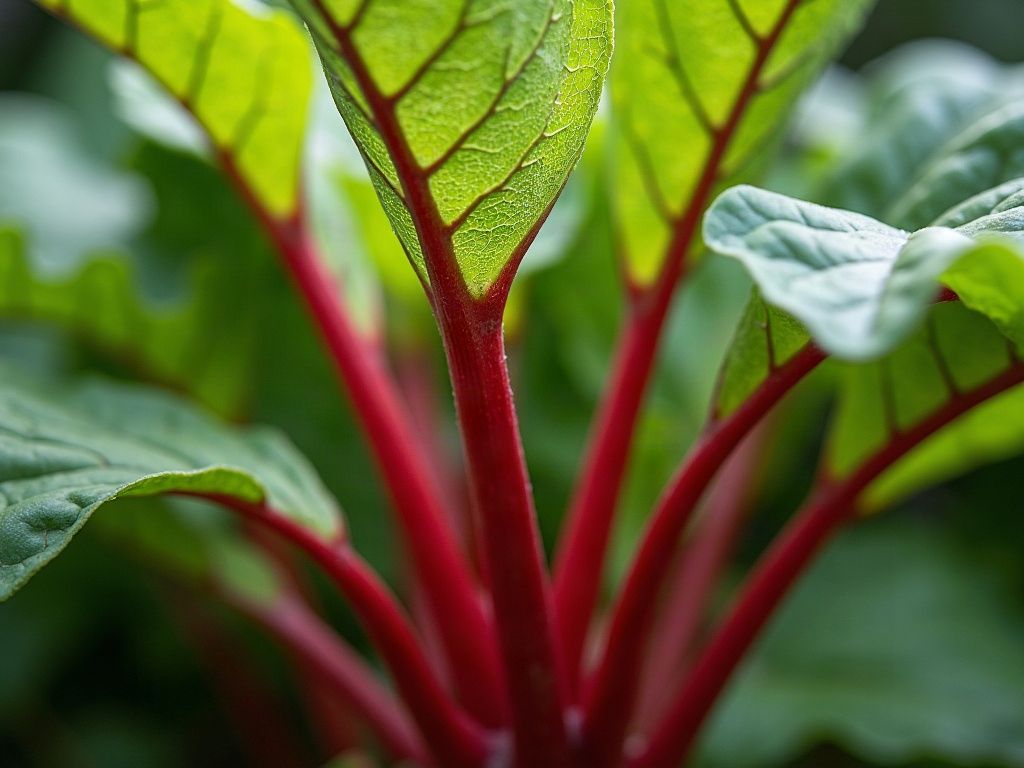
A rhubarb crown, once established, can keep producing for a decade or more with barely any attention.
Rhubarb is a long-lived perennial that needs almost no attention once established, coming back reliably each spring for years. Forcing a crown under cover in midwinter produces an earlier, sweeter, more tender crop than leaving it to grow naturally.
Sowing & growing calendar
| J | F | M | A | M | J | J | A | S | O | N | D | |
|---|---|---|---|---|---|---|---|---|---|---|---|---|
| Feed | Feed in February | Feed in March | ||||||||||
| Harvest | Harvest in April | Harvest in May | Harvest in June | |||||||||
| Job | Job in January | Job in February |
Care details
- Job January – February
Cover a crown with a bin or forcer for an early, tender crop.
- Feed February – March
Mulch generously with well-rotted manure as growth restarts.
- Harvest April – June
Pull stems (don’t cut); stop by midsummer to let the plant recover.
Growing tips & common problems
- Never harvest in the first year after planting — let the crown establish before taking any stems.
- Remove flower spikes as soon as they appear; left to bloom, the plant puts its energy into seed instead of stems.
- Stop pulling stems by midsummer, whatever the temptation, to let the plant recover for next year.
Become a better gardener in just 12 emails
Get one email per month with gardening tips on what to plant and do that month.
100% free • No spam • Unsubscribe any time