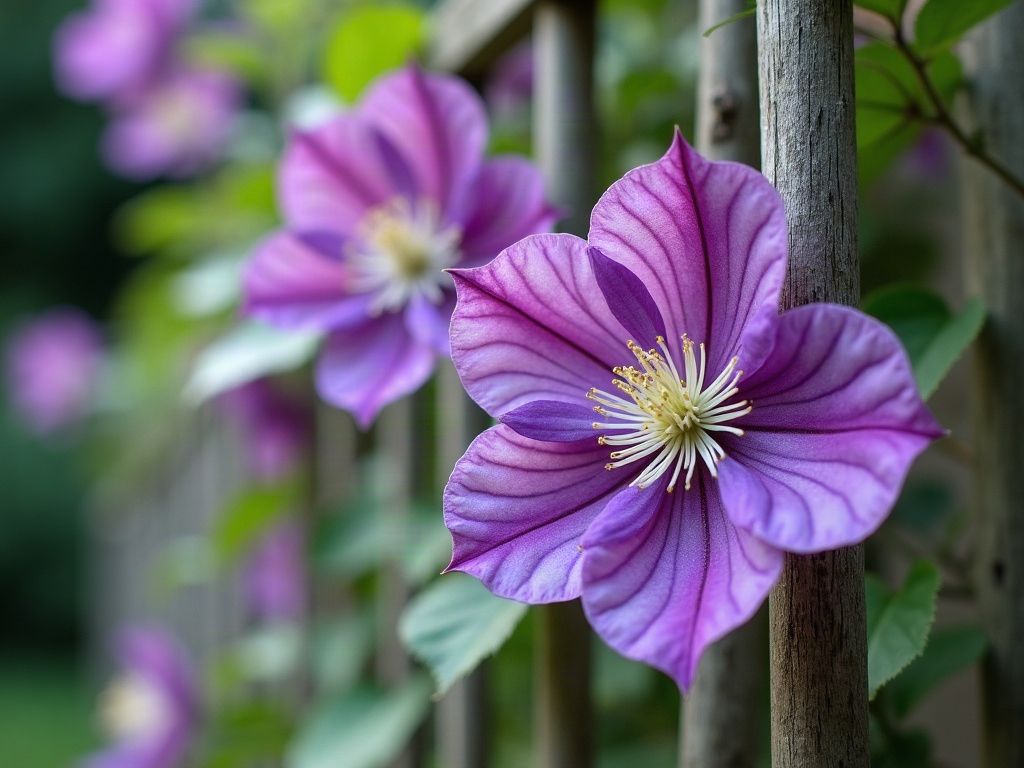
Clematis pruning famously has three different groups and three different rules — get it wrong and you lose a season of flowers, not the plant.
Clematis pruning depends on which of three groups a variety belongs to, and getting it wrong at worst costs you a few weeks of flowers rather than the plant itself. All types share the same odd preference for shaded, cool roots even as the top growth reaches for full sun.
Sowing & growing calendar
| J | F | M | A | M | J | J | A | S | O | N | D | |
|---|---|---|---|---|---|---|---|---|---|---|---|---|
| Feed | Feed in March | Feed in April | ||||||||||
| Prune | Prune in February | Prune in March | ||||||||||
| Job | Job in May |
Care details
- Prune February – March
Cut most large-flowered types back hard to a healthy pair of buds — not sure which group you have? Treat it as late-flowering; you’ll lose a few weeks of flowers at worst, not the plant.
- Feed March – April
Mulch and feed as growth restarts — clematis are hungry, thirsty plants.
- Job In May
Keep the roots shaded and cool with a slate or pot at the base, even as the top grows into full sun.
Growing tips & common problems
- If you don't know which pruning group you have, treat it as late-flowering — the safest default.
- Plant deeper than most climbers, with the base a few centimetres below soil level, to guard against clematis wilt.
- Keep the roots cool and shaded with a slate, pot, or low planting at the base, even as the top grows into sun.
Grows well with
Personalise your own weekend list →Become a better gardener in just 12 emails
Get one email per month with gardening tips on what to plant and do that month.
100% free • No spam • Unsubscribe any time