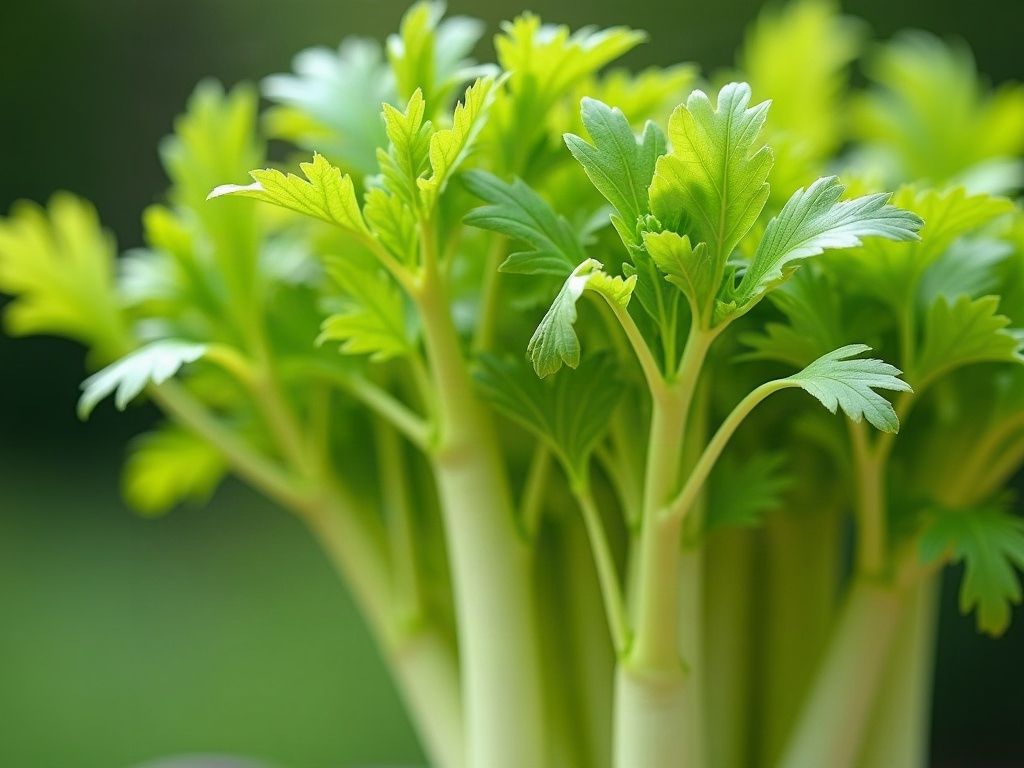
Celery has a reputation for being fussy, but a self-blanching variety grown close together in rich, moisture-retentive soil removes most of the difficulty.
Self-blanching celery is far more forgiving than the traditional trench varieties, needing no earthing up as long as it’s planted in a close block. The main risk is inconsistent watering — a dry spell early on produces stringy, bitter stems that never really recover.
Sowing & growing calendar
| J | F | M | A | M | J | J | A | S | O | N | D | |
|---|---|---|---|---|---|---|---|---|---|---|---|---|
| Sow | Sow in March | |||||||||||
| Plant | Plant in May | |||||||||||
| Harvest | Harvest in August | Harvest in September |
Care details
- Sow In March
Sow indoors — celery seed is slow and needs light to germinate, so barely cover it.
- Plant In May
Plant out in a block once all risk of frost has passed.
- Harvest August – September
Cut whole plants at the base once stems are a usable size.
Growing tips & common problems
- Never let the compost or soil dry out — celery bolts (runs to seed) at the first sign of drought stress.
- Plant close together in a block rather than a single row; the plants shade each other's stems and self-blanch without earthing up.
- A thick compost mulch around the base does more for celery than watering alone — it locks moisture in rather than letting it evaporate between waterings.
Grows well with
Personalise your own weekend list →Become a better gardener in just 12 emails
Get one email per month with gardening tips on what to plant and do that month.
100% free • No spam • Unsubscribe any time