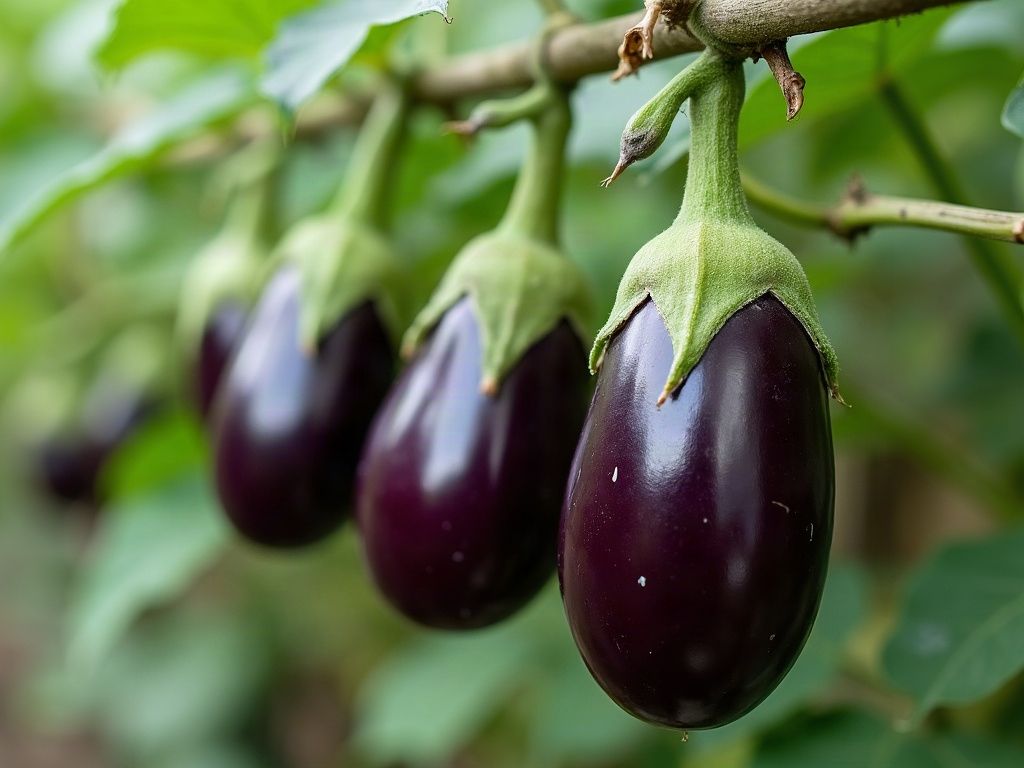
Aubergines demand more heat than almost anything else grown outdoors in the UK, but a glossy, homegrown fruit is a different vegetable entirely from a supermarket one.
Aubergines are a greenhouse crop for most of the UK, needing consistent warmth that few gardens can offer outdoors even in a good summer. Support heavier fruiting stems with a cane, and keep the compost evenly moist — like celeriac, a check in growth from drying out is hard for the plant to recover from.
Sowing & growing calendar
| J | F | M | A | M | J | J | A | S | O | N | D | |
|---|---|---|---|---|---|---|---|---|---|---|---|---|
| Sow | Sow in January | Sow in February | ||||||||||
| Plant | Plant in May | |||||||||||
| Harvest | Harvest in August | Harvest in September |
Care details
- Sow January – February
Sow indoors in a heated propagator — aubergines are slow and need real warmth to germinate.
- Plant In May
Plant into a greenhouse or polytunnel once temperatures are reliably warm.
- Harvest August – September
Cut fruit while the skin is still glossy — a dull skin means it's past its best.
Growing tips & common problems
- Sow very early — aubergines need one of the longest seasons of any UK vegetable, so a late start rarely catches up.
- Pinch out the growing tip once the plant reaches about 30cm to encourage a bushier shape that carries fruit better.
- Mist the foliage occasionally in a dry greenhouse — red spider mite is the main threat, and it thrives in still, dry air.
Grows well with
Personalise your own weekend list →Become a better gardener in just 12 emails
Get one email per month with gardening tips on what to plant and do that month.
100% free • No spam • Unsubscribe any time